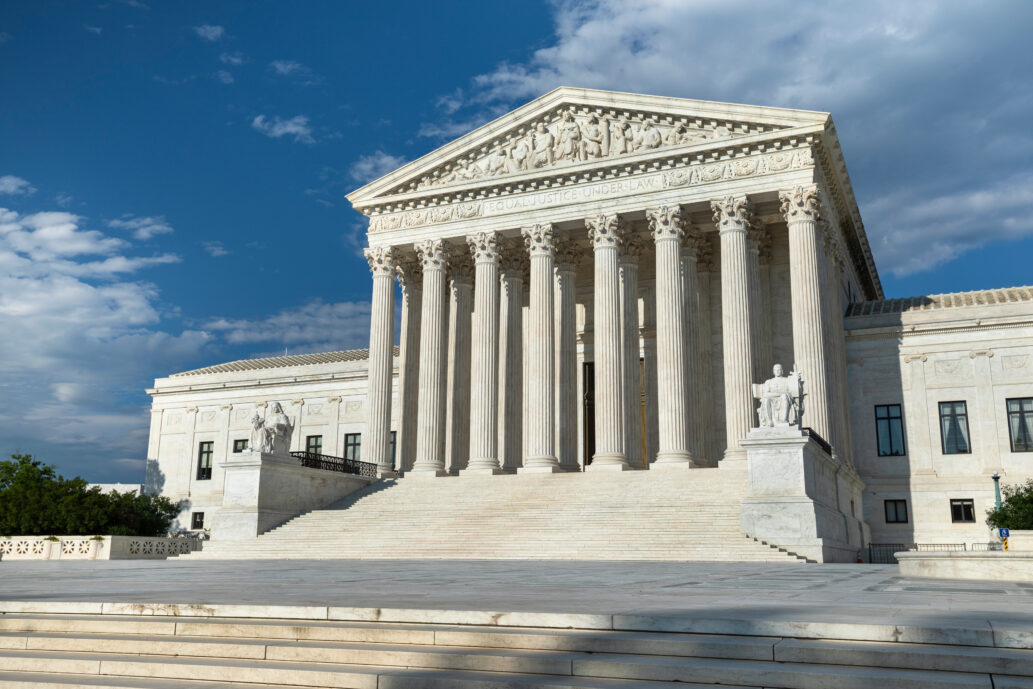
By a 6-3 decision, the Supreme Court on Friday said the president cannot use an emergency act to impose tariffs.
The justices said the International Emergency Economic Powers Act (IEEPA) does not authorize the president to impose tariffs. President Donald Trump used the authority to issue tariffs on some goods and “reciprocal” tariffs on countries.
The ruling, authored by Chief Justice John Roberts, said to justify the tariffs, the president must point to clear congressional authorization.
Roberts wrote, “He cannot.”
The justices also reviewed whether an exception to the authorization was available for emergency statutes. The ruling said the Constitution’s framers gave Congress alone the power to impose tariffs during peacetime.
“The foreign affairs implications of tariffs do not make it any more likely that Congress would relinquish its tariff power through vague language or without careful limits,” the ruling stated.
The decision did not address whether companies could obtain refunds for the billions of dollars in tariffs they paid. According to U.S. Treasury data, the U.S. collected $287 billion in tariffs in 2025.
The Supreme Court’s decision does not affect tariffs imposed by authorization other than the IEEPA. These include tariffs imposed after a Section 232 review under the 1962 Trade Expansion Act. Aluminum and steel tariffs fall under Section 232 authority. The authority requires a review to determine whether national security interests require tariffs.
Tariffs on goods from China, subject to a Section 301 review, are also unaffected by the Supreme Court ruling.