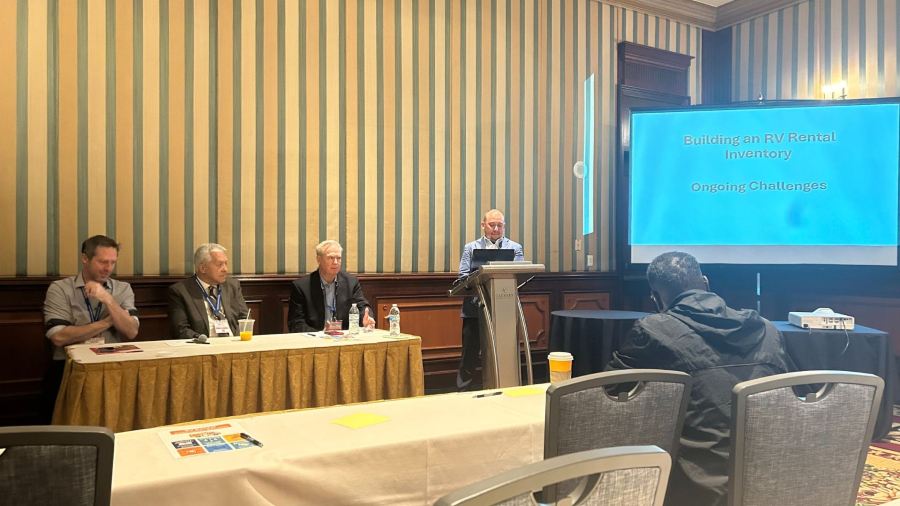
Three RV rental veterans recently gathered to discuss how smart stocking, renter training and well-timed resale can be key to staying profitable.
The panel, hosted by MBA Associates, discussed implementing downtime mitigation strategies and weighing how long to keep a unit in a rental fleet before selling the RV completely. Panel members included Byerly RV President Warren Patton, Expedition RV President Martin Onken and Lightnin’ RV Rentals owner Steve Lewis.
Panelists said a big issue facing RV rental dealers is the downtime that RVs spend on the lot. They said the rental RVs essentially lose value with each passing day.
Onken said he has two major ways to combat downtime without renting RVs to unqualified applicants.
“We try to rent it to people who are not going to break it. We work really hard to qualify the renter before we accept the reservation, and we have a very high security deposit,” Onken said. “Secondly, keeping up on proper maintenance is absolutely critical to prevent a lot of problems that can come up.”
Lewis said training renters to use the RV properly is key to keeping his costs low. He said that ensuring renters participate in the demonstration leads to better outcomes.
When determining an RV’s rental lifespan, panelists said dealers must consider mileage, model year, market and manufacturer.
“I am skittish after approximately 24 months…18 to 24 months is pretty perfect,” Patton said. “After that, it gets tougher to sell. That being said, it really depends on the market.”
Lewis said his customers value model year over mileage when renting. He said selling an RV that is a few model years old, but still has decent mileage, is the sweet spot.
“Customers are not calling to ask how many miles are on that thing,” Lewis said. “They do want to know what year it is.”
All three panelists agreed that dealers must consider the manufacturer when determining an RV’s rental life. Patton said he had a few RVs from one manufacturer that did not withstand the wear and tear common in his rental market.
Patton said a different batch of RVs from a different manufacturer held up so well he kept them in his rental fleet an extra season.
“Depending on the manufacturer,” he said, “we can keep them in longer,” Patton said.
Panelists said economic pressures, tariffs and supply chain issues are still impacting RV and parts availability.
Lewis said keeping commonly replaced parts in stock can be key to keeping your units available to rent.
“Usually, the first awning that gets knocked off of the season,” Lewis said. “I just order two.”
Keeping a fleet of similar trailers enables Lewis to swap parts between different RVs as needed.
“We only have about three different awnings for the 40 vehicles on my lot,” Lewis said. “Try to get to the point where we are better stocked at having those handful of key components that you know you want the customer to have on the trip.”
The panel discussed managing the number of RVs that dealers should carry in a rental fleet. Onken said he determines how many rentals he expects in a year.
“Let’s say my capacity is to do 100 rentals per year,” he said. “If I have 10 vehicles in my fleet, I can send each out 10 times a year. I am not looking at filling my calendar. I am just looking for the best 100 rentals I can get.”
Lewis said his experience at the RVDA Convention was very positive in regard to the health of the RV rental industry.
“There were several dealerships considering starting up rentals as well as numerous independent attendants looking to start or expand to RV rentals,” Lewis said. “For me personally, it speaks to how vibrant RV rental business is right now.”