Over the last few years, campgrounds nationwide received complaints of potentially fatal hot skin conditions at their parks.
The numerous complaints led industry leaders to address the issue. The National Electrical Code (NEC) added a new requirement that all new RVs be equipped with a new device called a Ground Monitor Interrupter (GMI).
The GMIs cut all power to the RV if the device detects an unstable current coming from the pedestal.
Late last year, enforcement of the GMI requirement was delayed from model year 2026 RVs to model year 2028.
Industry experts said pushing back enforcement was due to a mix of caution and foresight.
The Timeline
The 2023 NEC required that all new RVs be equipped with a loss-of-ground device. The device is designed to prevent injuries by detecting and responding to a loss of ground connections in electrical systems.
However, no such device existed in 2023. The requirement’s enforcement was set for Jan. 1, 2026, to provide time for the industry to develop a solution.
Underwriters Laboratories (UL) is an independent organization that tests and certifies electrical devices. UL wrote language defining what a Type II GMI should be to meet the NEC requirements. The document, UL 2299, the Outline of Investigation for Grounding Monitor Interrupters, was published Jan. 26, 2024.
In 2025, the market still had not produced an acceptable GMI. In late September 2025, the 2026 NEC was published, codifying the Jan. 1, 2026, GMI deadline for RVs.
Two months later, RVIA’s Standards Steering Committee recommended to the Board of Directors that enforcing the GMI requirement should be delayed. The board unanimously approved the recommendation.
“At this time, it is expected that enforcement will coincide with the start of model year 2028, or approximately June 1, 2027,” an RVIA spokesperson said. “A final determination will be subject to the availability of sufficient GMIs for use in RV manufacturing.”
What Is a GMI?
A UL-listed GMI must be designed to monitor the incoming power to the RV. If the GMI detects a loss of grounding, the device must successfully deny or interrupt power until the grounding connection is restored.
A Type I GMI monitors the power connection. A Type II GMI does everything a Type I GMI does and also is able to deny power to the RV.
“A GMI tests the receptacle it is plugged into to ensure it is wired correctly and has a proper ground connection,” RVIA said. “If incorrect wiring or a loss of ground connection is detected, the GMI will not allow electricity to pass through or will disconnect power if the loss of ground occurs during operation.”
According to the 2026 NEC, the GMI requirement says:
“(D) Grounding Monitor Interrupter (GMI). Recreational vehicles with a 30- or 50-ampere feeder assembly shall have a listed Type II grounding monitor interrupter (GMI) permanently installed between the feeder assembly connection to the vehicle and before either of the following:
- The panelboard if not provided with a transfer switch ahead of the panelboard.
- The transfer switch ahead of the panelboard, if provided. Exception: The GMI shall be permitted to be integral to the utility supply side of the transfer switch or panelboard.
Informational Note: See UL 2299, Outline of Investigation for Grounding Monitor Interrupters, for Type II (GMIs). A Type II GMI meets the requirements of a Type I GMI that monitors and interrupts the ungrounded conductors if grounding is lost and additionally monitors and interrupts the grounding conductor if a potential is present on the grounding conductor.”
RVIA said the goal of closely monitoring grounding is to help protect against potentially fatal shock from a hot-skin condition.
Why Has Enforcement Been Delayed?
RV Electricity founder Mike Sokol said he believes the reasons the industry was not prepared to comply with the Jan. 1 date could be the price to build a GMI and the time taken to develop any new product.
“This is an unfunded mandate,” Sokol said. “Everybody pushes back against this sort of thing. You have got to do it, but who is going to pay for this?
Sokol said he thinks one reason for the delay is that no one could produce a prototype that worked properly and was ready for installation in thousands of RVs.
Sokol said a product like a GMI needs a longer design cycle. Sokol said the design challenges included variances in pedestal installations over time and the need for GMI devices to work in RVs ranging from small teardrops to 45-foot Type A motorhomes. He said some manufacturers were not willing to invest the time and capital into a product they were not 100% convinced would ever make it to market.
“None of the manufacturers were going to put the engineering in until they knew that it was going to happen…the classic chicken and egg problem,” Sokol said. “It is like seatbelts in cars. Once it is required, boom, there it is. They finally sat there and started looking at this whole thing and said, ‘This is just way too much to happen way too quickly.’”
Sokol said an entirely new electrical monitoring system, such as the Type II GMI, requires original design, prototyping, beta testing and scaling up for production.
“Plus, this will be a UL-listed device, which can normally take up to a year of UL testing,” Sokol said. “I understand it is on a fast track for UL certification, but even then, it will take months for it to pass UL tests. If there is any delay in manufacturing GMI devices this coming year, it could result in a production bottleneck that would impact RV manufacturing.”
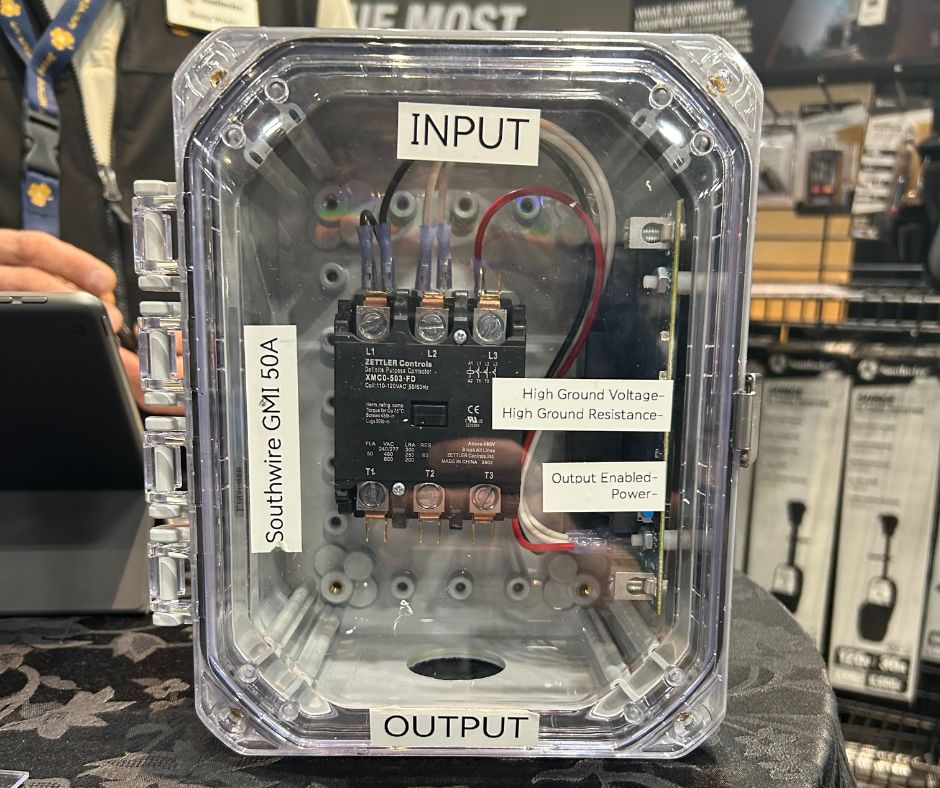
Southwire Marine and RV Sales Manager Kenny Wright said his company had a viable GMI ready to be produced on a mass scale and installed in 2026 model-year RVs.
“We are ready to go, we are ready to roll,” Wright said. “It kind of stinks for me. There was a lot of excitement around this.”
Wright said Southwire was well-positioned because it already offers a similar product, a transfer switch, which needed minimal modification to meet GMI requirements.
Wright said his 25-year history on the OEM side of the industry gives him some perspective on the possible reasons for the delay.
“I just think there was a lot of bugs that still needed to be worked out when it comes to how code writers are going to combine this new element into the code that runs the RV,” Wright said. “So, the more time, the better…but the sales part of me…I was looking forward to a big opportunity for us.”
According to RVIA, the new requirement was placed on RV manufacturers due to the hot skin risk. The term used to describe when the exterior metal, metal frame or other metal components of an RV become dangerously electrified.
Sokol said touching a hot skin RV while standing on the ground can result in a fault current passing through a person’s body. The voltage through a consumer’s body at that stage can be fatal. Sokol said suppliers are taking GMI design and production more seriously now. He said he does not expect additional delays, although he said, “anything can happen.”
More detailed information on hot skin conditions can be found here.