Many RV industry members are familiar with the grounding monitor interrupters (GMI) that manufacturers will eventually be required to install in RVs. Fewer are familiar with the reason behind the requirement.
According to RVIA, the risk of potentially fatal electric shock from hot-skin conditions on RVs necessitated GMIs’ creation.
Hot skin is the term used to describe the condition when an RV’s exterior metal, metal frame or other metal components become dangerously electrified.
RV Electricity founder Mike Sokol gave a presentation on hot skin and GMIs at last year’s Keller Marine & RV Accessory Show.
“A hot-skin voltage is when the electrical potential of your RV skin and chassis is a significant voltage level above the earth ground around it,” Sokol said. “While it is quite normal for there to be a few volts difference between your RV’s grounding system and earth ground, once you get above five volts difference, which is a hint there may be something wrong with your RV’s grounding system via its shore power connection.”
Sokol said touching a hot skin RV while standing on the ground can result in a fault current going through your body at potentially fatal voltage.
RVIA said that over the last six years, several consumer complaints about hot skin have been made. Neither Kampgrounds of America (KOA) nor the National Fire Protection Agency keeps statistics on reports or confirmed hot-skin cases.
“Damage to a power cord and the use of dog-bone adapters, causing a compromised electrical supply,” RVIA said, “are the most common reasons for requesting this update to the NEC.”
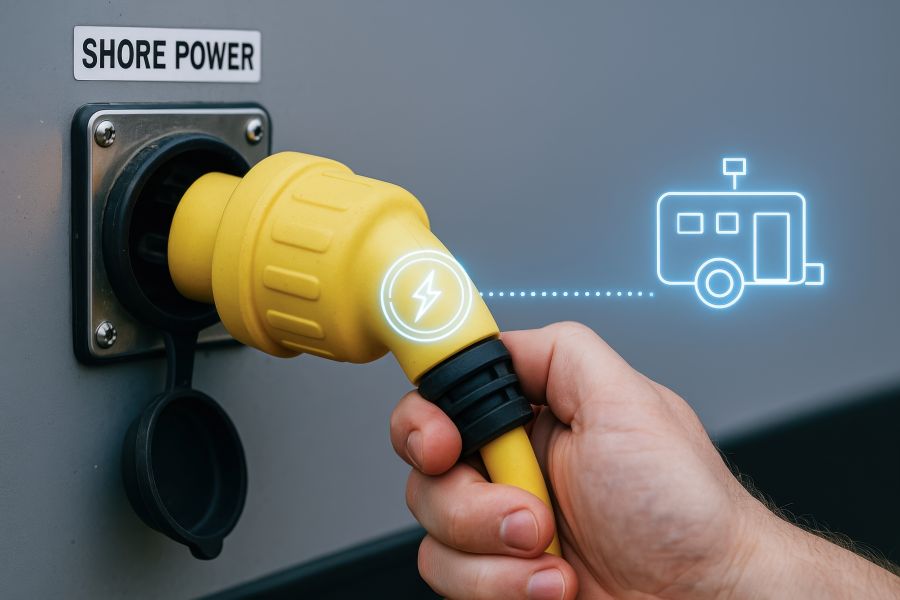
Once installed, GMIs will ensure the shore power connected to an RV is wired correctly and has a solid ground connection. If it identifies an issue with the current, the GMI will disconnect power to the RV.
OHI Advanced Outdoor Hospitality Director of Marketing Riley Wilson and KOA President and CEO Toby O’Rourke said hot-skin reports are rare. They said the new regulations are proactive and prevent dangerous grounding issues.
According to Sokol, a current fault leakage leads to the hot-skin conditions. He said the leakage can start with an RV’s radio frequency filter capacitors in a charger or converter. A melted or corroded electric water heater component could cause the leakage, as could a high-current fault from a direct short-circuit.
The result is a voltage leak from a few milliamperes to 30 amps.